
LISTEN ON SPOTIFY
LISTEN ON APPLE
What if protecting your brain from cognitive decline starts with something you’ve been working on for years: your metabolism?
We often think about brain health as something to worry about later in life. But according to neurologist and bestselling author Dr. David Perlmutter, the metabolic health decisions we make in our 30s, 40s, 50s, and beyond can have profound implications for our brain decades later.
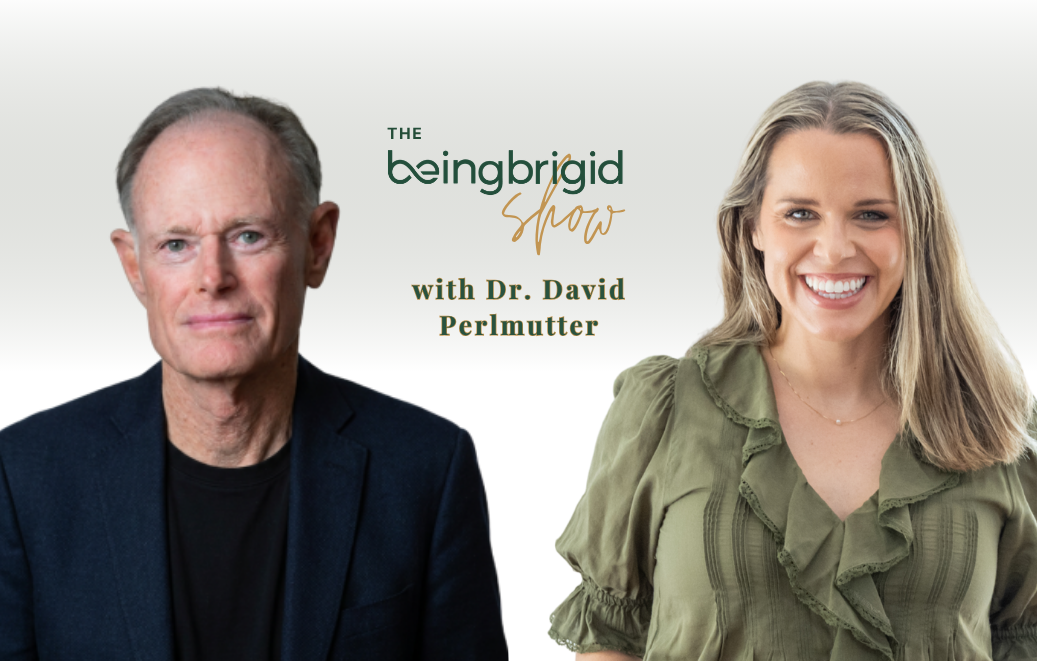
In this episode of The BeingBrigid Show, Brigid sits down with Dr. David Perlmutter, author of Grain Brain, Brain Maker, Drop Acid, and his newest book, Brain Defenders, to explore the emerging science connecting blood sugar, insulin resistance, inflammation, gut health, metabolism, and brain health.
The conversation offers an empowering perspective on Alzheimer’s disease and other neurodegenerative conditions: instead of waiting for cognitive symptoms to appear, we can start building healthier metabolic and lifestyle patterns now.
What You’ll Learn In This Episode:
- Why blood sugar, insulin resistance, and metabolic health have such profound implications for brain health
- The connection between chronic inflammation, gut health, the blood-brain barrier, and cognitive decline
- Why Alzheimer’s prevention needs to begin decades before cognitive symptoms appear
- How ultra-processed foods can challenge metabolism and potentially affect the brain’s immune system
- Why muscle mass is an important part of brain health and longevity
- The role of both aerobic exercise and resistance training in protecting the brain
- How air pollution and other environmental exposures can contribute to inflammation
- Why supplements can’t compensate for an inflammatory, high-glycemic diet
- How lifestyle changes may help support brain health even in people with an APOE4 genetic predisposition
- Why prevention—and taking ownership of your health—is so important for long-term cognitive function
Timestamps:
- 00:00 Introduction to Brain Immunity and Neurodegeneration
- 02:09 The Science of Immunometabolism and Brain Cells
- 04:00 Metabolic Compromise and Microglial Activation
- 05:27 The Connection Between Metabolism and Alzheimer’s Risk
- 07:49 Early Prevention and Lifestyle Choices
- 09:17 Microglia M1 and M2 States Explained
- 12:10 Ultra-Processed Foods and Brain Health
- 14:07 PET Imaging and Microglial Activation
- 16:00 Blood-Brain Barrier and Gut-Brain Connection
- 18:12 Imaging Microglia in Living Humans
- 19:50 The Cost of Neurodegenerative Diseases
- 21:47 Controlling Body and Brain Metabolism
- 24:02 Personal Motivation and Family Impact
- 28:01 Genetic Risks and Lifestyle Strategies
- 37:03 Lifestyle Interventions and Cognitive Preservation
- 41:09 Environmental Toxins and Brain Health
- 45:02 Air Quality and Inflammation
- 48:01 The Power of Diet and Exercise
- 56:04 Exercise Types for Brain Health
- 01:00:00 Building Muscle and Brain Benefits
- 01:01:50 Preventive Strategies for Brain Aging
The Connection Between Metabolic Health and Brain Health
Dr. Perlmutter explains that the brain has its own immune cells called microglia. When metabolism is functioning well, these cells can support neurons and the connections between them. But metabolic dysfunction—including elevated blood sugar, insulin resistance, increased inflammation, increased body fat, and elevated blood pressure—can change how these cells function.
According to Dr. Perlmutter, this can shift microglial cells away from their supportive role and toward a more destructive inflammatory state.
This gives us a much broader reason to care about blood sugar balance and metabolic health. These aren’t simply concerns related to weight, body composition, diabetes, or pre-diabetes. They may also be important pieces of long-term brain health.
Why Brain Health Starts Earlier Than You Think
One of the biggest takeaways from this episode is that we shouldn’t wait for cognitive symptoms to appear before we start thinking about prevention. Dr. Perlmutter explains that the metabolic changes associated with neurodegenerative disease can begin decades before someone notices memory loss or other cognitive symptoms. In the conversation, he emphasizes the importance of addressing metabolic health during midlife and even earlier rather than waiting until later adulthood.
That makes this conversation especially relevant to Women’s Health, Women’s Nutrition, perimenopause, menopause, and healthy aging. The goal isn’t simply to change your body composition. It’s to create the metabolic foundation that supports your entire body—including your brain—as you age.
Blood Sugar, Insulin Resistance, and Cognitive Health
Dr. Perlmutter explains that elevated blood sugar and insulin resistance can influence the brain’s immune system. He also discusses research using PET imaging to evaluate how effectively the brain uses glucose and how changes in brain glucose metabolism can be associated with future cognitive decline.
This is one reason metabolic health deserves attention even if you haven’t been diagnosed as diabetic. Blood sugar regulation exists on a spectrum, and addressing metabolic dysfunction before it progresses can be an important part of a Functional Nutrition approach to long-term health.
The Gut-Brain Connection and the Blood-Brain Barrier
Dr. Perlmutter compares the blood-brain barrier to the protective lining of the gut. Both act as selective barriers, allowing necessary nutrients through while helping keep potentially harmful substances where they belong.
He explains that metabolic dysfunction and elevated blood sugar can threaten the integrity of the blood-brain barrier. At the same time, factors that negatively affect gut health may also contribute to inflammation and changes in the brain’s immune system.
Ultra-Processed Foods and Chronic Inflammation
Dr. Perlmutter discusses research examining ultra-processed food intake and Alzheimer’s risk. He is careful to point out that observational associations do not prove causation, but he connects the findings with what we already understand about metabolic dysfunction, elevated blood sugar, inflammation, and microglial activation.
Rather than promoting one restrictive diet, Dr. Perlmutter’s approach is focused on what food does in the body. His goal is to choose foods that help regulate blood sugar, reduce inflammation, and support the microbiome. That philosophy fits naturally with a food is medicine approach: instead of becoming overwhelmed by competing diet labels, focus on the physiological effects of your food choices.
Can a CGM Help You Understand Your Blood Sugar?
Dr. Perlmutter explains that a CGM can help people observe how their individual blood sugar responds to different foods, meal timing, exercise, sleep, and other lifestyle factors. He even shares a personal example of being surprised by his response to cashews.
This is an important distinction: nutrition isn’t always one-size-fits-all. A food that produces a relatively modest blood sugar response for one person may produce a very different response for someone else. Using data as a tool for personalized nutrition can help people better understand their own metabolic patterns.
Why You Can’t Supplement Your Way Out of a Poor Diet
Dr. Perlmutter is also direct about the role of supplements: they are supplementary.
He argues that supplements shouldn’t be viewed as a replacement for a nutrient-dense diet. Instead, the foundation needs to be the food you eat, along with movement, sleep, stress management, and other lifestyle factors.
His dietary framework emphasizes plenty of colorful plants, fiber, polyphenols, healthy fats, and adequate protein. The goal isn’t to follow another complicated set of food rules. It’s to create dietary patterns that support metabolic health, the microbiome, and lower inflammation.
Why Muscle Is Part of Brain Health
Dr. Perlmutter recommends combining aerobic exercise with resistance training. He explains that muscle produces signaling molecules called myokines that can influence the brain and other tissues, including pathways involved in metabolism, inflammation, blood flow, and brain-derived neurotrophic factor (BDNF). This makes preserving muscle especially important as we age.
For women navigating perimenopause, menopause, and post-menopause, this is a powerful reminder that exercise isn’t simply about burning calories or changing body composition. Building and maintaining muscle can be part of a broader strategy for metabolic health, mobility, longevity, and brain health.
Dr. Perlmutter recommends combining resistance training with aerobic exercise, while also emphasizing flexibility and balance so that you can continue moving consistently over time.
Environmental Toxins and Brain Inflammation
Nutrition is only one piece of the brain-health equation. The episode also explores environmental exposures, particularly fine particulate matter known as PM2.5. Dr. Perlmutter discusses how air pollution can contribute to inflammation throughout the body and potentially affect the brain.
This expands the conversation around holistic nutrition and root cause healing. What we eat matters, but so do the air we breathe, the quality of our sleep, physical activity, stress, and our broader environment.
What APOE4 Means for Brain Health
Dr. Perlmutter emphasizes that having an APOE4 allele is a predisposition rather than a predetermined outcome. He discusses research examining lifestyle interventions—including diet, exercise, stress reduction, and cognitive training—and the improvements observed in participants with metabolic issues, including those carrying APOE4.
The larger message is one of agency: genetics can influence risk, but it doesn’t mean there is nothing you can do.
The Bigger Message: Start Building Your Brain Defense Now
Perhaps the most empowering takeaway from this episode is that brain health isn’t something we have to surrender control over. Dr. Perlmutter’s message is to start addressing metabolic health now rather than waiting for cognitive symptoms to appear. That means focusing on blood sugar balance, an anti-inflammatory diet, regular movement, muscle mass, sleep, stress management, gut health, and environmental exposures.
You don’t need to do everything perfectly. You need to start. And as Dr. Perlmutter explains, the goal isn’t simply to live longer. It’s to protect the quality of those years—to preserve cognitive function, energy, independence, and the ability to remain connected to the people you love.
Resources & Links:
+ Watch the full episode on YouTube
+ Dr. Perlmutter’s Website
+ Preorder Dr. Perlmutter’s Newest Book, Brain Defenders
+ Dr. Perlmutter’s Instagram
+ Dr. Perlmutter’s Youtube
+ Dr. Perlmutter’s Podcast
+ Join The Being Collective
+ Brigid’s Website
+ Brigid’s Instagram
Related
How to Protect Against Alzheimer’s & Calm Hidden Brain Inflammation with Dr. David Perlmutter
Tired of Feeling Foggy, Bloated, or Depleted?
A complete plan to feel better, built for real life
In our science-backed nutrition and lifestyle membership you'll work a team of Registered Dietitians and get everything you need to reduce inflammation, improve energy, and feel better. No rigid calorie counting. No mystery supplements.
Meet The Being Collective
Resources
Join 30,000+ subscribers getting expert guidance to optimize their health and prevent chronic disease
sign up for our newsletter
Free, weekly insights from Brigid to help you feel like yourself again
Explore
 take the quiz