
LISTEN ON SPOTIFY
LISTEN ON APPLE
What if the missing piece in your health journey isn’t another supplement, diet, workout, or wellness protocol—but learning how to listen to your body?
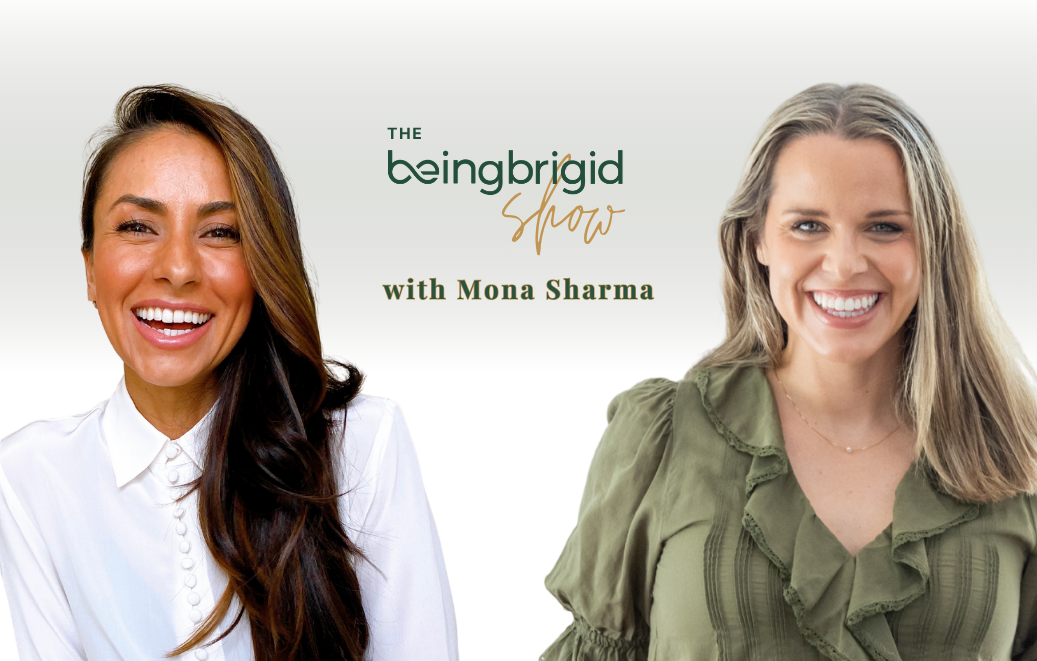
In this episode of The BeingBrigid Show, Brigid sits down with Mona Sharma, celebrity nutritionist, health coach, global wellness speaker, and host of Rooted in Wellness, for a deeply insightful conversation about nervous system regulation, gut health, hormones, inflammation, functional nutrition, and root cause healing.
Mona has worked with high-profile clients including Will Smith, Jay Shetty, and Julianne Hough, but her approach to health isn’t about following someone else’s perfect protocol. Instead, she combines modern science with ancient practices such as yoga, Ayurveda, breathwork, mindfulness, and nervous system regulation.
The conversation explores an important question for anyone who has tried seemingly everything to improve their health: What if healing requires you to go deeper than simply changing what you eat?
What You’ll Learn In This Episode:
- Why nervous system regulation is foundational to whole-body health
- Nervous system flexibility vs. simply trying to stay calm
- How chronic stress may influence digestion, inflammation, sleep, and energy
- Simple nervous system regulation practices you can use every day
- Box breathing and 4-7-8 breathing
- The connection between nervous system health and gut health
- Women’s health, hormones, perimenopause, and menopause
- Why root cause healing requires looking beyond a single symptom
- How identity and beliefs influence consistency and health behaviors
- How to balance health data with your body’s own wisdom
- The role of nature, mindfulness, yoga, Ayurveda, and ancient healing practices
- Why personalized nutrition and individualized healthcare are the future of wellness
- What it means to become the CEO of your own health
Timestamps:
- 00:00 Introduction to Mona Sharma and episode overview
- 02:03 Understanding nervous system regulation and dysregulation
- 04:24 The concept of nervous system flexibility and resilience
- 09:10 Practices for nervous system regulation: breath work, sound, and nature
- 15:02 Personal healing story: from corporate stress to holistic balance
- 23:14 The importance of self-awareness and personalized health protocols
- 28:28 Women’s health, hormonal shifts, and root cause healing
- 36:04 The role of ancient wisdom and modern science in healthcare
- 44:36 Quantum physics and the future of personalized healing
- 49:29 Commonalities in health transformation among celebrities
- 51:30 Building your own healing blueprint and daily self-care
- 55:43 Final thoughts: self-healing, love, and self-trust
- 56:08 Where to find Mona Sharma and final message
Why Nervous System Regulation Matters for Your Health
We live in a world where chronic stress has become so normalized that many people don’t recognize how stressed they actually are. Mona explains that one of the biggest misconceptions about nervous system regulation is that the goal is to feel calm all the time. Instead, what we’re really looking for is nervous system flexibility—the ability to move between different states and return to a place of safety, balance, and resilience.
When the nervous system is consistently perceiving threat, the body can prioritize protection over restoration. This can show up in many ways, including digestive symptoms, sleep issues, fatigue, irritability, anxiety, and difficulty feeling motivated or present.
This is one reason a holistic nutrition and functional nutrition approach can’t focus exclusively on food. Nutrition matters deeply—food is medicine and what we eat provides information to our cells—but the body exists as an interconnected system.
You Can’t Out-Diet Chronic Stress
Mona shares a powerful message throughout this episode: you can’t simply out-diet or out-exercise a chronically dysregulated nervous system. This is particularly relevant for women who are doing everything they believe they’re “supposed” to do for their health—eating a restrictive diet, exercising intensely, taking supplements, tracking their metrics, and constantly searching for the next answer—while still struggling with low energy, digestive issues, inflammation, or hormonal symptoms.
Functional nutrition and personalized nutrition coaching can help identify important factors contributing to someone’s health concerns, but lasting change also requires understanding the stress, behaviors, beliefs, environment, and patterns that influence those choices.
Simple Ways to Support Nervous System Regulation
Nervous system regulation doesn’t have to require an elaborate wellness routine. Mona encourages people to first develop awareness. Instead of immediately asking, What should I do?, start by asking: How does my body feel right now? How does your heart feel? How does your digestion feel? Are you tense? Overwhelmed? Energized? At ease?
From there, you can begin creating a personalized nervous system regulation practice. For Mona, this can include spending time in nature, breathwork, somatic movement, sound, humming, gargling, meditation, and creating intentional rituals at the beginning and end of the day.
She also shares two accessible breathing practices: box breathing and 4-7-8 breathing. Both can be practiced almost anywhere and can be useful tools for shifting your state and creating a greater sense of calm. Even something as simple as leaning back in your chair can serve as a physical reminder to move out of a constantly activated, forward-driving posture and give your body a moment to settle.
Your Health Protocol Should Be Personalized to You
There is no single perfect diet, exercise routine, supplement protocol, or nervous system regulation practice that works for everyone. The same principle that applies to personalized nutrition also applies to nervous system health: your needs are unique to you.
What helps one person feel grounded may not work for another. One person may find peace through nature, while another responds more strongly to movement, breathwork, music, connection, or meditation. This is where functional medicine and functional nutrition can be powerful. Rather than assuming every person needs the same protocol, the goal is to understand the individual—their symptoms, history, lifestyle, environment, nutrition, stress, and health goals—and use that information to create a more personalized approach.
Mona’s Personal Story: From Anxiety and Heart Palpitations to Nervous System Healing
Mona’s understanding of nervous system regulation isn’t purely theoretical. She discovered its importance through her own health journey. In her twenties, while working in the corporate cosmetic industry, Mona was experiencing significant anxiety and chronic stress. She developed severe heart palpitations, with her heart rate sometimes reaching more than 200 beats per minute.
She was prescribed a beta blocker and eventually underwent two procedures for atrial tachycardia, including multiple ablations. At the same time, she was following an extremely restrictive diet and exercising intensely, yet she continued to gain weight and eventually lost her menstrual cycle.
Eventually, Mona made the decision to step away from her previous lifestyle and return to practices she had experienced growing up, including yoga, meditation, breathwork, mindfulness, and living in community. She spent two months at the Sivananda Ashram in the Bahamas, where she became a yoga teacher and began experiencing what she describes as a profound shift in her relationship with her body.
Her story ultimately shaped the way she works with clients today. Rather than simply asking, “What diet should I put you on?” she began asking deeper questions about how people feel, how they live, what they believe about themselves, and what their bodies may be communicating.
Why Knowing What to Do Isn’t the Same as Being Able to Do It
Most people don’t need more information. They already know that vegetables are nutritious. They know sleep matters. They know movement is beneficial. They know that chronic stress isn’t ideal. So why can consistency be so difficult?
Mona believes that lasting behavior change requires us to look beyond the surface-level behavior and explore identity and belief systems. What do you believe about yourself? Do you believe you’re someone who can be healthy and vibrant? Do you believe that nothing will work for you long term? Do you see yourself as someone who is always starting another diet and eventually “falling off the wagon”?
These beliefs can influence the decisions we make every day. Instead of constantly trying to fix yourself, Mona encourages people to consider what it would look like to build a relationship with their health that is rooted in self-trust, consistency, and self-love.
Nervous System Health, Hormones, Perimenopause & Menopause
Brigid and Mona also discuss an important issue in women’s health: the tendency to view hormonal changes as the sole explanation for symptoms during perimenopause and menopause. Hormone health is incredibly important, and modern medicine has made significant advances in understanding women’s hormones and hormone replacement therapy. But Mona emphasizes the importance of considering the bigger picture.
For women who have spent years depleted, chronically stressed, overwhelmed, undernourished, or disconnected from their bodies, hormonal changes may exacerbate patterns that have already been developing underneath the surface. This is why women’s nutrition and women’s health require a multifaceted approach.
Looking at hormones alone may not tell the whole story. Sleep, nutrition, blood sugar regulation, gut health, chronic inflammation, stress, movement, relationships, and emotional wellbeing can all be important pieces of the larger picture.
Can Health Data Actually Become Too Much?
Lab testing, health metrics, and tools such as a Continuous Glucose Monitor (CGM) or wearable can provide useful information and help someone understand patterns in their health. But more information isn’t always better.
Mona shares how her Oura Ring helped her identify that something was changing in her body during a period of inflammation, ultimately prompting her to investigate further. At the same time, she recognized that constantly checking her data could become another source of anxiety.
This raises an important question: Are your health tools helping you understand your body—or are they telling you how you’re supposed to feel? Data can be incredibly useful, but it shouldn’t replace your own awareness of your body.
Modern Medicine + Ancient Wisdom: Can We Have Both?
Brigid and Mona agree that we don’t have to choose one or the other. Modern medicine can be extraordinary when acute care, diagnosis, medication, procedures, and advanced testing are needed. At the same time, ancient traditions such as Ayurveda, yoga, meditation, breathwork, and traditional healing practices can offer valuable tools for reconnecting with the body and supporting wellbeing.
The opportunity is to integrate these approaches thoughtfully. That’s the heart of an integrative healthcare model: using science and data while also recognizing the lived experience and wisdom of the person sitting in front of you.
The Power of Nature, Connection & Simple Health Practices
Throughout the conversation, Mona repeatedly comes back to something remarkably simple: the things that make people feel best are often the things we already know intuitively. Being outside. Feeling the sun on your skin. Walking in nature. Putting your feet on the grass or sand. Hugging someone you love. Being fully present. Taking a deep breath. Eating nourishing food. Spending time away from screens.
These practices may sound simple, but that doesn’t mean they’re insignificant.
An anti-inflammatory lifestyle isn’t only about a perfect anti-inflammatory diet. Health is influenced by the total environment in which we live—including how we sleep, move, connect, eat, recover, and respond to stress.
Becoming the CEO of Your Own Health
Mona’s overarching message is simple but powerful: you are not broken, and you don’t need to spend your entire life trying to fix yourself. Practitioners, doctors, dietitians, coaches, and other experts can provide guidance. Data can provide information. Science can give us tools. But ultimately, you are the person living inside your body every day.
Becoming the “CEO of your own health” means learning to pay attention to what your body needs and making choices that align with the person you want to become.
One of Mona’s favorite questions is: Is this nourishing me or depleting me?
You can ask it about your food, your relationships, your work, your thoughts, your habits, your environment, and even the health information you’re consuming. The goal isn’t perfection. It’s consistency. It’s resilience. And it’s learning to trust that your body is capable of responding, adapting, and healing.
Resources & Links:
+ Watch the full episode on YouTube
+ Mona’s Instagram
+ Mona’s Website
+ Mona’s Podcast
+ Join The Being Collective
+ Brigid’s Website
+ Brigid’s Instagram
Related
Nervous System Overload: Why You Feel Exhausted, Anxious & Burned Out (and How to Reset It) with Mona Sharma
MORE ENERGY, FEWER CRAVINGS, BETTER BLOOD SUGAR BALANCE—IN JUST 7 DAYS.
Sign up to get:
✓ A done-for-you 7 day meal plan full of dietitian-tested, blood-sugar–friendly recipes
✓ Coaching calls with me and my team of Registered Dietitians
✓ Support + accountability inside our private community
✓ Science-backed strategies that help you feel the shift
Sign up for The Blood Sugar Reset Waitlist today!
Join the waitlist to be the first to know when enrollment opens again.
Resources
Join 30,000+ subscribers getting expert guidance to optimize their health and prevent chronic disease
sign up for our newsletter
Free, weekly insights from Brigid to help you feel like yourself again
Explore
 take the quiz