

It’s not uncommon to visit your doctor, have your annual labs drawn, and be told that your cholesterol levels are rising or are above the recommended range. If this happens, there are a few important factors to consider:
1-While cholesterol levels do provide some insight into heart health, they are just one piece of the puzzle when assessing cardiovascular disease risk. Some experts argue that total cholesterol is less significant than other markers, making it essential to look more comprehensively at other lipid markers.
A national study published in 2009 found that nearly 75 percent of patients hospitalized for a heart attack had LDL cholesterol levels within the recommended guidelines, and almost half had optimal LDL levels. Similarly, a 2017 study revealed that most major heart attacks happen in people with normal cholesterol levels.
2-In addition to lipid markers, factors such as inflammation and oxidative stress play a significant role in the formation of atherosclerotic plaque and contribute to heart disease risk.
3-Studies show that diet and lifestyle changes can be highly effective in both lowering cholesterol and reducing cardiovascular disease risk. Despite an increase in prescription drug use and other medical interventions, cardiovascular disease (CVD) remains the leading cause of death worldwide, significantly shortening lifespan. The key turning point in addressing CVD will come when we prioritize consistent, proactive nutrition and lifestyle choices as the first line of defense, reserving medical treatments and modern tools for when they’re truly necessary. An anti-inflammatory, blood sugar balancing protocol must be the foundation for everyone.
With the right approach, you can optimize your cholesterol and reduce your risk for heart disease, without relying on pharmaceuticals as the only option. Food plays a powerful role!
One of our clients, Melanie, is an example of this. She significantly lowered several heart healthy markers as a result of following my nutrition frameworks and lowering her stress. Here are her results:
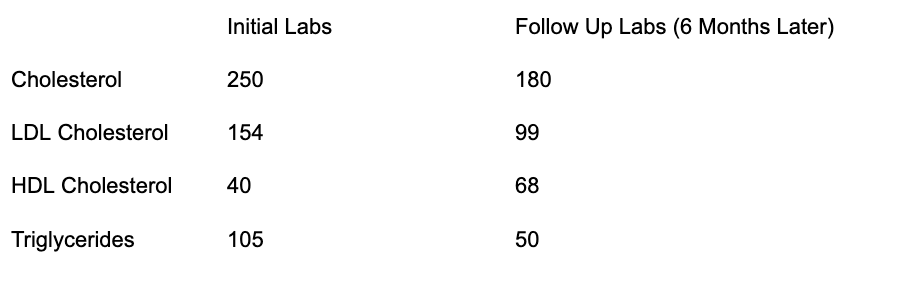
Here are 7 key ways to optimize your cholesterol levels and protect your heart health:
1. Understand Cholesterol Beyond Total Numbers
Most often doctors look at total cholesterol, LDL cholesterol (lousy) and HDL cholesterol (healthy). The general recommendation is to 1) lower LDL cholesterol, which helps clear LDL particles from the bloodstream, reducing risk of plaque formation and 2) raise HDL cholesterol which picks up fat from the arteries and brings them back to the liver.
But then you want to go deeper. Thinking about the idea of “good” and “bad” cholesterol on the surface can lead to oversimplifying a complex molecule. That’s because HDL and LDL cholesterol have different subtypes. Not all LDL cholesterol particles are created equal. Small, dense LDL particles (commonly referred to as “Pattern B” phenotype) are more likely to oxidize and contribute to plaque buildup in the arteries, increasing your risk for atherosclerosis. On the other hand, large, buoyant LDL particles are far less harmful.
Helpful labs to check: standard lipid panel (total cholesterol, HDL cholesterol, LDL cholesterol, triglycerides) plus lipoprotein particle number (LDL-p) and small LDL particle number.
Aim to increase HDL while lowering small, dense LDL. This can be achieved through dietary changes including limiting added sugar, exercise, and reducing other risk factors.
2. Increase Dietary Fiber for Better Cholesterol Control
Dietary fiber is one of the most effective tools for lowering cholesterol. Soluble fiber, in particular, helps bind to cholesterol and carry it out of the body, reducing the amount circulating in the bloodstream (Fu et al., 2022).
The recommended daily intake of fiber is at least 40 grams, which can be achieved by consuming a variety of high-fiber foods such as:
- Non-starchy vegetables (e.g., leafy greens, broccoli, brussels sprouts)
- Legumes (lentils, lupini beans, kidney beans)
- Nuts and seeds (chia seeds, almonds, walnuts)
- Fruits (raspberries, kiwi, blueberries, strawberries)
Incorporating psyllium husk is another great way to boost soluble fiber intake (1 tablespoon=7g of fiber), which can lead to a significant reduction in total LDL cholesterol levels, while benefiting gut health, hormonal balance, and blood sugar regulation (Jovanovski, 2018).
3. Limit Added Sugar and Refined Carbohydrates
Excess sugar and refined carbohydrates can have a dramatic effect on your lipid profile, especially increasing levels of small, dense LDL particles which increases cardiometabolic risk. If you are eating too much added sugar and too many refined grains it can increase inflammation, elevate blood sugar, and promote multiple adverse changes to lipid measures, including higher levels of small dense LDL particles (Haslam, 2022).
Research also suggests that added sugar—rather than saturated fat—may be a more significant driver of heart disease. A significant study found that people who ate 25% or more of their daily calories from added sugar had an almost three-fold increase in death from cardiovascular disease. To protect your heart, minimize added sugars and refined grains (such as bagels, pasta, and bread) while focusing on whole, intact carbs like sweet potatoes, legumes, and whole grains (DiNicolantonio et al., 2014).
4. Increase Omega-3 Fatty Acids
Omega-3 fatty acids are powerful nutrients that can reduce inflammation, lower triglycerides, and improve overall heart health. A 2023 study showed that a higher intake of omega 3 fatty acids was associated with significant reductions in triglyceride levels and may play a beneficial role in managing dyslipidemia. Fatty fish like salmon, sardines, and mackerel are excellent sources of omega-3s. Aim to eat fatty fish at least 3 times per week (Wang et al., 2023).
Another great source of plant-based omega 3s are ground flaxseeds. Flaxseeds are rich in both omega-3s and fiber, which can help lower cholesterol. Aim for 1-2 tablespoons of ground flaxseed daily (Bloedon & Szapary, 2004).
5. Incorporate Cholesterol-Lowering Superfoods
Certain foods have been shown to directly lower cholesterol levels. Adding more of them to your diet can be highly beneficial! Here are some of the most effective:
- Extra Virgin Olive Oil Consistent evidence has shown that a higher intake of extra virgin olive oil is associated with a 16% lower risk of cardiovascular disease. (Martinez-Gonzalez, 2022).
- Soy-based foods: Studies show that consuming more soy (e.g., tofu, tempeh, edamame) can lower cholesterol and reduce the risk of cardiovascular disease (Yang, et al., 2017). The key is purchasing high quality, organic soy foods.
- Carotenoid-rich foods: Phytochemicals like beta-carotene and lycopene, found in foods like tomatoes, pink grapefruit, and watermelon, have been shown to improve cardiovascular disease risk. The proposed mechanisms include: lowering inflammation, increasing nitric oxide bioavailability, and mitigating LDL oxidation (Tierny et al., 2020).
6. Move Your Body Regularly
Cardiovascular exercise has profound benefits for heart health. It helps raise HDL cholesterol (the “good” cholesterol), which can remove harmful cholesterol from the bloodstream. Regular physical activity also improves blood circulation, reduces inflammation, and lowers the risk of chronic conditions like hypertension and diabetes.
Aim for walking 7,000+ steps per day and adding 30-45 minutes of moderate-to-vigorous cardio. This could include activities like jogging or running, swimming, hiking or dancing.
7. Focus on Managing Chronic Inflammation and Oxidative Stress
While cholesterol levels are a key marker of heart health, other factors like chronic inflammation and oxidative stress play an even bigger role in cardiovascular disease. High levels of inflammation in the body can damage blood vessels and promote the formation of arterial plaque, leading to heart disease. Managing inflammation is absolutely for heart health. The most effective ways to combat inflammation include:
- A whole food anti-inflammatory nutrition plan
- Reducing stress through mindfulness, meditation, and relaxation techniques
- Getting adequate sleep (7-9 hours per night)
- Getting on the right supplements
- Avoiding smoking, which exacerbates oxidative stress
Cholesterol Is Just One Piece of the Heart Health Puzzle
Other factors to consider for optimal heart health include:
- Inflammation: Chronic inflammation from a pro-inflammatory diet is one of the most common contributors to heart disease.
- Nutrient deficiencies: Deficiencies in vitamins and minerals (e.g., magnesium, vitamin D) can negatively impact heart health.
- Blood pressure: High blood pressure can damage blood vessels and increase the risk of heart disease.
- Smoking: Smoking accelerates plaque buildup in the arteries and contributes to chronic inflammation.
- Physical inactivity: Lack of exercise is a significant risk factor for cardiovascular disease.
Improve Your Toolbox
If you want a healthy heart and optimal lab values, a whole food, anti-inflammatory meal plan MUST BE your foundation. There is no way around it. We must shift the focus to prevention and optimization rather than simply resorting to treatment.
Tired of Feeling Foggy, Bloated, or Depleted?
A complete plan to feel better, built for real life
In our science-backed nutrition and lifestyle membership you'll work a team of Registered Dietitians and get everything you need to reduce inflammation, improve energy, and feel better. No rigid calorie counting. No mystery supplements.
