
LISTEN ON SPOTIFY
LISTEN ON APPLE
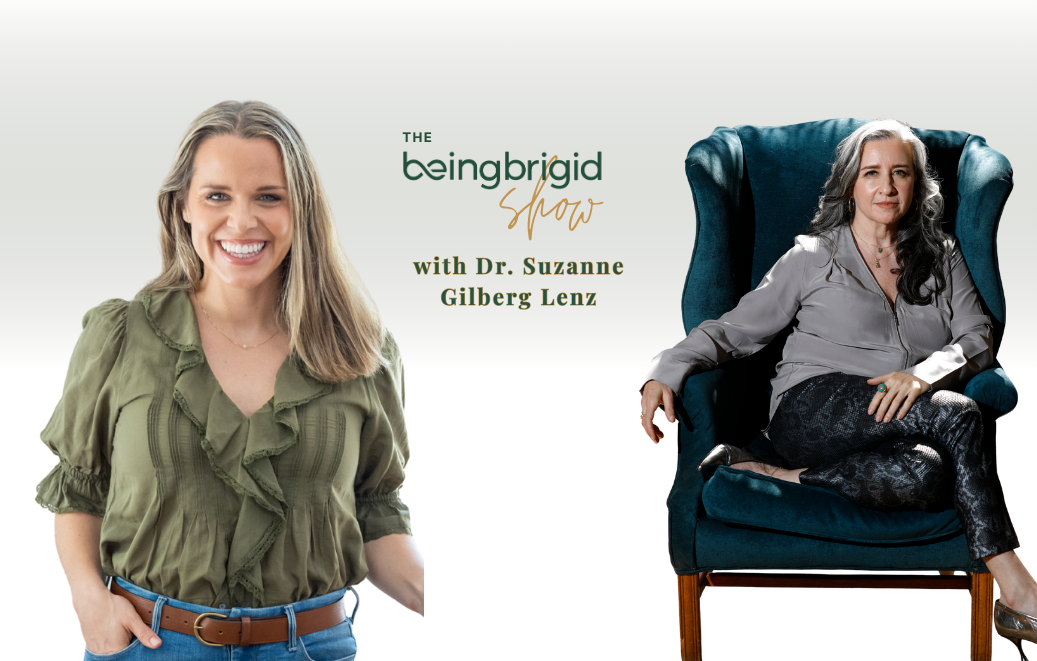
What if your hot flashes were actually a red flag for your heart and brain health—not just an annoying symptom to suffer through? In this episode of The BeingBrigid Show, Brigid sits down with double board-certified OB/GYN and integrative physician Dr. Suzanne Gilberg to unpack what you should really know about perimenopause, menopause, hormone replacement therapy (HRT), the Women’s Health Initiative, and how to advocate for yourself when you’re being dismissed.
What You’ll Learn In This Episode:
- Why menopause is a full-body transition (not just hot flashes)
- How estrogen receptors in every cell impact bones, brain, heart, gut and more
- What the Women’s Health Initiative actually showed and how it was misinterpreted
- When hormone replacement therapy can be helpful—and for whom it’s not appropriate
- The difference between “bioidentical” and synthetic hormones (and why the wording is confusing)
- How vaginal estrogen can support UTIs, vaginal dryness and genitourinary symptoms
- The role of functional medicine, gut health and blood sugar in perimenopause and post-menopause
- What women in their 30s can do now to support future bone density, heart health and cognition
Timestamps:
- 00:00–Intro to Dr. Suzanne Gilberg & Menopause Bootcamp
- 03:05–Menopause as a full-body transition, not just hot flashes
- 05:10–Conventional OB/GYN meets integrative and Ayurvedic medicine
- 10:25–Grassroots change: how women forced medicine to pay attention
- 14:45–Medical training, fear and why doctors “stay in the box”
- 19:50–Gaslighting, “normal” labs and why women feel dismissed
- 35:50–Women’s Health Initiative: design flaws, breast cancer risk and fallout
- 41:30–HRT safety: estrogen, progestins, breast cancer and heart disease
- 44:50–Estrogen, osteoporosis and fracture risk; brain and sleep benefits
- 45:30–Rapid-fire Q&A on age to start HRT, bioidentical hormones, testosterone, UTIs and more
- 51:25–Vaginal estrogen vs systemic estrogen and recurrent UTIs
- 52:30–Labs, blood sugar, inflammation, functional nutrition and midlife prevention
- 58:25–What 35-year-old women should do now to support hormone health
Why Menopause Is a Full-Body Transition
Dr. Gilberg explains why menopause is not “just hot flashes.” Estrogen receptors exist in nearly every tissue in the body—bones, brain, heart, liver, gut, lungs, even the eustachian tubes. When hormone levels decline, symptoms can look like anxiety, joint pain, frozen shoulder, sleep disruption, body composition changes, vaginal dryness and urinary issues. Instead of dismissing these as “just getting older,” she reframes menopause as a critical opportunity to support women’s health, reduce inflammation and improve long-term outcomes with an anti-inflammatory diet, holistic nutrition and functional medicine.
The Women’s Health Initiative & the Hormone Backlash
The episode breaks down why the Women’s Health Initiative created such fear around hormones. Dr. Gilberg describes how the study enrolled older women, many more than 10 years past menopause, with existing cardiometabolic risk. The specific hormone regimen used is not how most women are treated today. The small increase in breast cancer risk was statistically significant but not very clinically meaningful, yet it led to dramatic headlines and a mass drop in HRT use. As a result, only a small percentage of women now use hormone therapy, and research in women’s hormone health slowed for decades.
Bioidentical vs Synthetic Hormones: Clearing Up the Language
The terminology around “bioidentical” versus “synthetic” hormones is confusing. Dr. Gilberg explains that many medications are technically synthetic because they’re manufactured—but bioidentical hormones are chemically identical to the hormones your ovaries naturally produced. She emphasizes that “natural” does not automatically mean better and that some non-bioidentical progestins can be very effective in specific situations, like controlling bleeding. She encourages women to be cautious of oversimplified claims that label one hormone “good” and another “bad” without context.
When Hormone Therapy Helps—and When It Might Not
Hormone therapy is a tool, not a cure-all. In this conversation, you’ll hear about the strong evidence for estrogen in reducing osteoporosis and fracture risk, its impact on sleep and musculoskeletal pain, and its potential benefits for brain health and cognition. Dr. Gilberg discusses when systemic HRT may not be appropriate and why vaginal estrogen is often still on the table—even for women who cannot use systemic hormones. She also addresses common questions about testosterone levels, libido, and when to consider adding testosterone.
Functional Medicine, Blood Sugar & Root-Cause Care
Brigid brings her functional nutrition lens to the conversation, connecting blood sugar, gut health and chronic inflammation to perimenopause symptoms. Together they discuss using labs to track fasting glucose, insulin, LDL, ApoB, CRP, ferritin, vitamin D and thyroid markers over time. They talk about how gestational diabetes increases future type 2 diabetes risk and why women should be screened earlier and more thoroughly. The episode highlights how tools like continuous glucose monitors (CGMs), anti inflammatory diet patterns and food-as-medicine strategies can improve energy, reduce symptoms and support hormone health.
Advocating for Yourself in a Time-Crunched System
Both Brigid and Dr. Gilberg acknowledge the reality of an insurance-based system that rewards short, checkbox visits rather than deep, root-cause healing. Dr. Gilberg shares practical strategies for women to advocate for themselves—booking dedicated visits to talk about perimenopause, bringing symptom and cycle tracking data, asking thoughtful questions about hormone options and being willing to seek support from practitioners trained in functional medicine, functional nutrition and women’s hormone health.
What Women in Their 30s Can Do Now
For women in their 30s who want to be proactive, Dr. Gilberg recommends getting baseline labs, understanding family history of early menopause and osteoporosis, and using cycle tracking to observe patterns in mood, energy, sleep and symptoms. She encourages building muscle with strength training, focusing on gut health and an anti-inflammatory way of eating, supporting blood sugar balance and addressing thyroid dysfunction early. The goal is not to “avoid” menopause, but to enter it informed, resourced and confident.
Resources & Links:
If you’ve ever been told “you’re fine” while your body says otherwise, this episode will help you feel seen and give you language to advocate for your hormone health, gut health and long-term longevity.
+ Watch the full episode on YouTube
+ Brigid’s Website
+ Brigid’s Instagram
+ Dr. Suzanne’s Website
+ Dr. Suzanne’s Facebook
+ Dr. Suzanne’s X
+ Dr. Suzanne’s LinkedIn
+ Dr. Suzanne’s Instagram
+ Dr. Suzanne’s TikTok
+ Dr. Suzanne’s YouTube
+ Where to Work with Dr. Suzanne
Related
You Were Misled About HRT: The Truth About Modern Hormone Therapy & the WHI Study (with Dr. Suzanne Gilberg-Lenz)
MORE ENERGY, FEWER CRAVINGS, BETTER BLOOD SUGAR BALANCE—IN JUST 7 DAYS.
Sign up to get:
✓ A done-for-you 7 day meal plan full of dietitian-tested, blood-sugar–friendly recipes
✓ Coaching calls with me and my team of Registered Dietitians
✓ Support + accountability inside our private community
✓ Science-backed strategies that help you feel the shift
Sign up for The Blood Sugar Reset today!
This 7-day live, guided nutrition program is for you if you’re tired of afternoon crashes, sugar cravings, and feeling "off".
Resources
Join 30,000+ subscribers getting expert guidance to optimize their health and prevent chronic disease
sign up for our newsletter
Free, weekly insights from Brigid to help you feel like yourself again
Explore
 take the quiz