
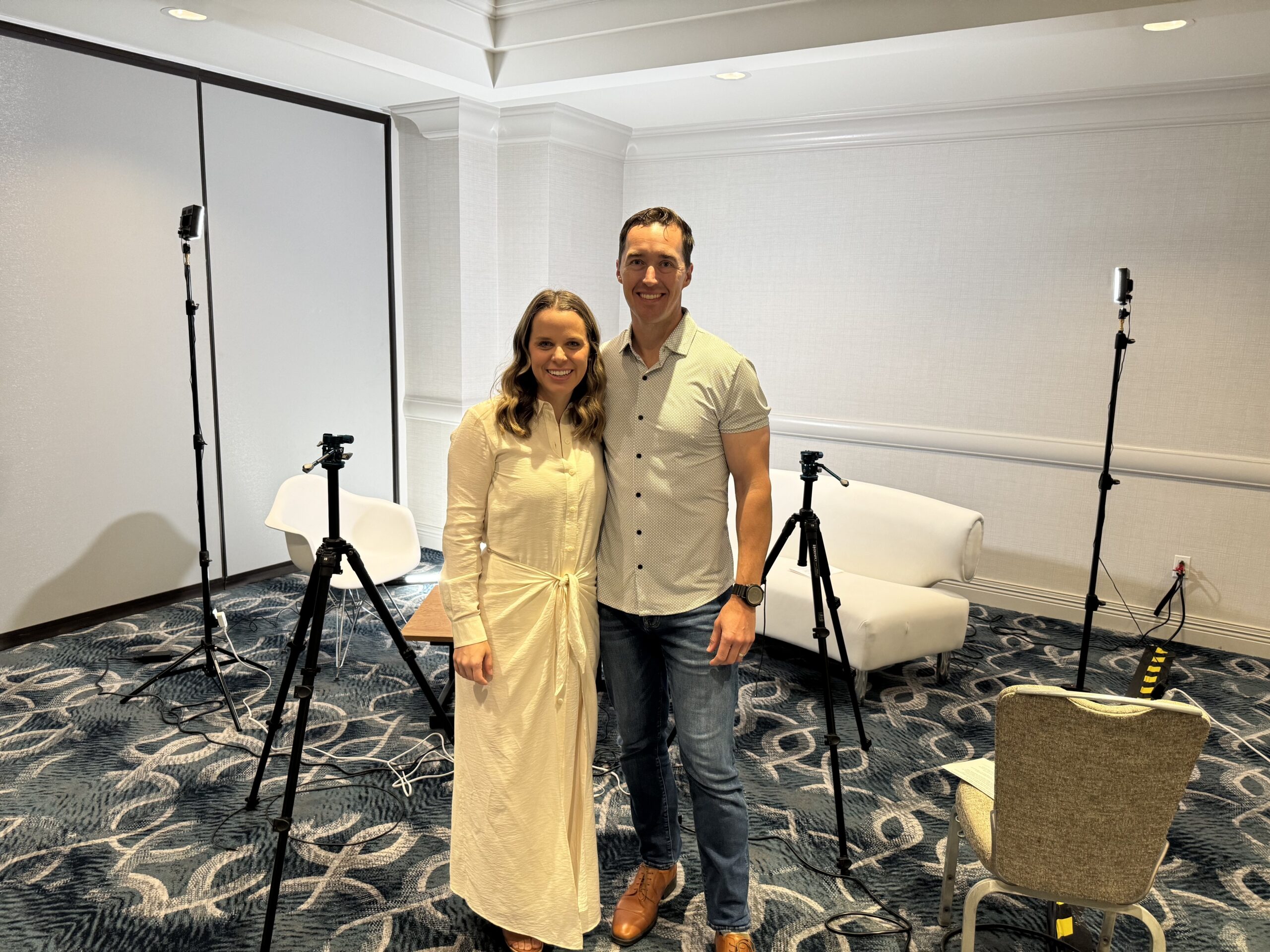
Last month I had the opportunity to go to the Institute for Functional Medicine Conference. We partnered with the organization so that I could host interviews with some of their incredible doctors for the BeingBrigid Show.
This is the annual conference for functional medicine practitioners and I always learn a lot. So I wanted to share some of my biggest takeaways from other practitioners that presented their innovative findings and protocols.

1-Forever Chemical Exposure May Be Aging Your Hormones
Dr. Deanna Minich presented on the endocrine system which impacts your blood sugar, hormones, thyroid and more. She shared that every decade can lead to different endocrine challenges for women, which only compound over time if they’re not addressed or resolved.
She shared a 2025 NHANES study that found that women with higher PFAS (found in nonstick pans, food packaging, stain-resistant clothing, and drinking water) had dramatic shifts in their hormone levels. Here were their findings: FSH +42%, AMH -32%, estradiol -33%, progesterone -41%.
Our environmental exposures impact hormones. If we aren’t able to excrete them appropriately they can alter hormones and increase inflammation. This is one reason why some women who eat “clean” and exercise still struggle with hormonal symptoms.
2-Both Microbial Diversity and Gut Barrier Lining Decline in Perimenopause
I’m not sure who shared this finding but this is also a concept that I’m interviewing Cynthia Thurlow on soon. Hormones lead to changes in our gut–both the diversity of bacteria living in the gut and also accelerate a decline in your gut barrier. This can lead to changes in carbohydrate, protein and fat metabolism; it can increase inflammatory symptoms; increase risk of autoimmune disease; lead to mood changes; increase vaginal dryness and UTIs and more.
This is one of many reasons that improving your hormones, lowering inflammation and improving metabolic health is not just about eating more protein. Additional ways to support the gut microbiome: a high fiber diet, prebiotics, polyphenols, variety with 30+ plants per week, limited alcohol, limited added sugar and refined grains. This is honestly why I love what we’ve created in my membership, The Being Collective where we do the meal planning for you to help you hit these goals!
3-Your Gut Bacteria Determine How Much Estrogen is Actually Circulating in your Body
The “estrobolome” — a collection of gut bacterial genes — controls how much estrogen gets reactivated vs. eliminated. This was shared by a PHD nutritionist, Annina Burns.
The key enzyme, beta-glucuronidase, determines whether estrogen is excreted or re-enters circulation. Too much = estrogen dominance symptoms (heavy periods, bloating, weight gain, breast tenderness). Too little = estrogen deficiency symptoms (hot flashes, vaginal dryness). This explains why two women with the same estrogen level can have completely opposite symptoms — and why gut health IS hormone health. The kicker: perimenopause itself causes the gut microbiome to decline, creating a hormonal cascade.
4-GLP-1 Medications May Suppress your Body’s Own Satiety Hormones, Making it Harder to Keep Weight Off After Stopping
Over two-thirds of patients regain weight after stopping GLP-1 medications. Monique Class, a Functional Medicine Nurse Practitioner shared that research suggests this may be because synthetic GLP-1 agonists can suppress the body’s endogenous production of GLP-1 and PYY.
Here’s what that could look like: you come off the medication with less natural satiety signaling than when you started. This is one of the many reasons you can not skip the nutrition piece, whether you are taking a GLP-1 medication or not.
Eating a whole, nutrient-dense diet with adequate fiber and polyphenols, protein and healthy fats, plus eating slowly can naturally stimulate your body’s triple satiety hormone network, without suppressing it.
5-Menopause Can Trigger a Metabolic “Triple Threat” That Makes Caloric Restriction Useless On Its Own
During the menopausal transition, three things happen simultaneously that most women — and many doctors — don’t connect:
- BMR can drop 250–300 calories/day. This means the same diet that maintained weight in your 30s now produces fat gain.
- Visceral fat jumps from 5–8% to 15–20% of body composition and this fat isn’t passive. It actively secretes inflammatory cytokines, drives insulin resistance, and converts androgens into estrogen via aromatase, further disrupting hormonal balance, driving more insulin resistance and increasing inflammation.
- Declining estrogen directly impairs muscle protein synthesis — accelerating sarcopenia, which reduces the primary tissue responsible for glucose disposal. Less muscle = less ability to clear blood sugar = more fat storage=more inflammation.
The result is a physiological environment where cutting calories extensively can make you feel worse and accelerate muscle loss, cardio alone doesn’t move the needle, and the standard advice fails. The research is clear: the two most powerful interventions are resistance training and increasing protein to 1.0–1.2 g/kg body weight — both of which directly address insulin sensitivity and muscle preservation, not just caloric balance. And then outside of that–there is more to holistically support your nutrition needs factoring in the gut microbiome and more.
Bonus Takeaway:
This past week I was on a panel with two other hormone experts–Dr. Tara Scott and Emily Sadri, NP. For the last 20 years Dr. Tara Scott has been working with women on their hormones. She shared that, while she’s seeing more younger women than ever before with symptoms coming into her clinic in their mid 30s, she’s also seeing more 57-year-old cycling women than she’s ever seen before. She thinks this is likely due to the effectiveness of the nutrition interventions that so many of her patients have been implementing:
- an anti-inflammatory, blood sugar-balanced diet
- getting enough protein
- removing ultra-processed foods
- limiting alcohol
I found that so fascinating, that someone with her experience of 20 years is seeing women still cycling. They are likely improving their ovarian health and decreasing their ovarian aging, which nutrition, supplements and lifestyle can do. And delayed onset of menopause can decrease the risk of the onset of every chronic disease and also support longevity.
So much is possible when it comes to improving your health. And we are living in very exciting times to better understand the mechanisms and identify the best protocols and interventions to help women feel better with age.
Tired of Feeling Foggy, Bloated, or Depleted?
A complete plan to feel better, built for real life
In our science-backed nutrition and lifestyle membership you'll work a team of Registered Dietitians and get everything you need to reduce inflammation, improve energy, and feel better. No rigid calorie counting. No mystery supplements.
