
LISTEN ON SPOTIFY
LISTEN ON APPLE
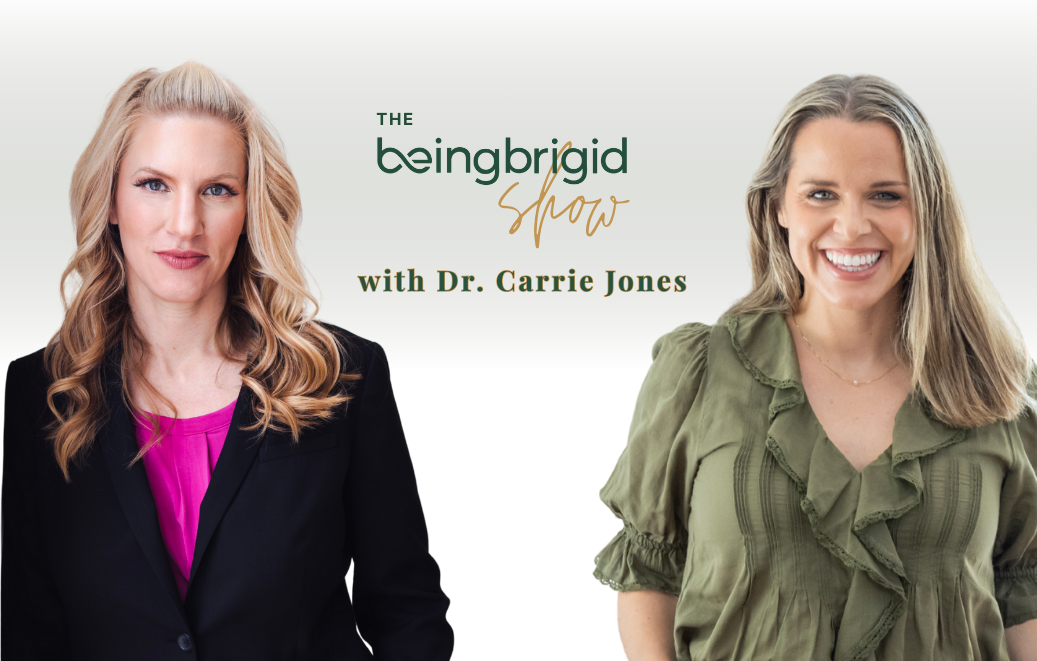
Waking up at 3AM with a racing heart, sudden anxiety, or unexplained weight gain—and being told it’s “just stress” or “just aging”? What if it’s actually a specific hormone shift in perimenopause…and there’s a simple way to start fixing it today? In this episode of The BeingBrigid Show, Brigid sits down with Dr. Carrie Jones, naturopathic doctor, Menopause Society Certified Practitioner, and hormone testing expert. Together, they break down why perimenopause can feel like the “zone of chaos,” what’s really driving sleep and mood changes, how blood sugar and cortisol influence hormone health, and what’s legit (or overhyped) in viral wellness trends.
What You’ll Learn In This Episode:
- Why GABA declines with age—and why women get hit harder in perimenopause
- The most effective non-HRT strategies to improve sleep (and 3AM waking)
- How cortisol and blood sugar swings can worsen PMS, anxiety, weight gain, and insomnia
- The “zone of chaos” explained and the common stages of perimenopause
- Lesser-known symptoms: joint pain, frozen shoulder, itchy ears, phantom smells, gut shifts
- Which wellness trends can support hormone health: lymphatic drainage, castor oil packs, seed cycling
- Why alcohol suddenly affects sleep, hot flashes, and anxiety more in your 40s
- HRT benefits beyond hot flashes: brain, heart, bones, mood, sleep, microbiome
- Bioidentical vs synthetic hormones—what the science says about risk and side effects
- Where to start with hormone and foundational lab testing (and what to do first)
Timestamps:
- 00:00 Introduction to Hormone Health and Perimenopause
- 02:49 Understanding Hormonal Imbalances
- 06:05 Non-HRT Interventions for Sleep and Anxiety
- 08:51 The Impact of Cortisol on Hormones
- 12:14 Navigating the Zone of Chaos: Perimenopause Stages
- 14:57 Identifying Symptoms of Perimenopause
- 17:52 The Connection Between Hormones and Gut Health
- 21:05 Exploring Wellness Trends: Lymphatic Drainage and More
- 23:52 The Role of Alcohol in Hormonal Changes
- 27:13 Hormone Replacement Therapy: Benefits and Risks
- 29:48 Understanding Bioidentical Hormones
- 33:00 The Importance of Hormone Testing
- 35:50 Blood Sugar and Hormone Health
- 39:02 Key Interventions for Hormonal Balance
- 41:52 Conclusion and Resources
What’s really behind 3AM waking, anxiety, and “I can’t handle stress anymore”
A major takeaway: women get hit with a double-whammy in perimenopause because GABA (a calming brain chemical) naturally declines with age, and progesterone—which supports GABA when it breaks down—also drops earlier in the perimenopause transition. That combination can show up as nighttime waking, racing thoughts, and a nervous system that feels stuck in fight-or-flight.
The conversation goes beyond quick fixes and highlights a holistic nutrition approach: protecting sleep, reducing inflammatory triggers, supporting the nervous system, and identifying root causes before assuming hormones are the only answer.
The non-HRT toolbox that actually moves the needle
Before jumping straight to hormone replacement therapy, Dr. Carrie emphasizes the basics that drive real change—especially for insomnia and anxiety: sleep hygiene (the unsexy but powerful foundation), minimizing evening alcohol (a common hidden driver of disrupted sleep), calming nutrients and botanicals (like magnesium and gentle nervous-system herbs), and strategic low-dose melatonin for some women as natural production declines with age.
Cortisol, blood sugar, and why hormones feel “off”
Perimenopause can increase insulin resistance, and when blood sugar becomes unstable, it can mimic or worsen hormone symptoms—think irritability, anxiety, fatigue, cravings, and poor sleep. Cortisol also raises glucose as part of survival physiology, so chronic stress and under-recovery can push the system further off-balance.
Perimenopause stages and symptoms nobody warned you about
Dr. Carrie breaks down why perimenopause feels chaotic: cycles may look normal, then suddenly go off-track—then normalize again. Many women notice symptoms before cycle changes, including brain fog, sleep disruption, mood changes, and weight changes. Heavier periods and worse PMS can show up as progesterone shifts. Later, women may experience dryness changes in skin, hair, and joints as estrogen declines.
Then come the “wait, is this perimenopause?” symptoms: frozen shoulder and generalized joint pain, itchy ears, phantom smells, burning tongue, zaps and tingles, and digestive changes like heartburn and gas.
Gut health in perimenopause: mucin layer, tight junctions, and new sensitivities
Hormone shifts can influence the gut lining and microbiome. Dr. Carrie explains how the protective mucin layer can thin and how tight junctions can become more “rickety,” contributing to bloating, constipation, inflammation, and rising food sensitivities. Many women notice the “bucket got smaller” effect—foods like gluten or dairy that were once tolerable suddenly trigger symptoms.
Viral wellness trends: what’s legit vs “majoring in the minors”
Brigid and Dr. Carrie give a grounded take on popular wellness trends. Lymphatic drainage matters, including in ovarian tissue, even if direct before-and-after studies are limited. Castor oil packs are widely used anecdotally for soothing inflammation and supporting digestion, with topical use emphasized. Seed cycling has limited research, but it can support fiber intake and dietary diversity. Electrolytes can help, and Dr. Carrie highlights that potassium is often under-appreciated.
The key: these can be helpful additions, but they don’t replace the foundations—sleep, stress management, nutrition consistency, and blood sugar stability.
HRT, bioidentical hormones, and what many women misunderstand
HRT is commonly associated with hot flashes because that’s what it’s FDA-approved for, but women often report broader benefits in real life: sleep, mood, joint comfort, vaginal symptoms, brain fog, and overall quality of life. Dr. Carrie also explains the difference between bioidentical hormones (matching what your body makes) and synthetic options, including why side effects and risks can differ.
She also shares why many traditional providers still default to older synthetic protocols—often due to training and comfort level—and why foundational lifestyle work still matters even when HRT is part of the plan.
Testing: where to start (and what not to skip)
Instead of jumping to advanced testing first, Dr. Carrie strongly recommends starting with baseline annual labs—especially because you often won’t “feel” changes in markers like cholesterol or glucose: glucose and insulin markers, cholesterol and lipids, thyroid markers, and vitamin D and core nutrients.
Hormone testing can be helpful for women who are still cycling regularly, while highly irregular cycles can make certain hormone snapshots less useful. The big theme: start with foundational labs, then go deeper if needed.
Resources & Links:
+ Watch the full episode on YouTube
+ Brigid’s Website
+ Brigid’s Instagram
+ Dr. Carrie’s Free Labs ebook
+ Dr. Carrie’s Website
+ Dr. Carrie’s Instagram
Related
3AM Waking, Anxiety & Brain Fog in Perimenopause: The Progesterone–GABA Fix with Dr. Carrie Jones
Resources
Join 30,000+ subscribers getting expert guidance to optimize their health and prevent chronic disease
sign up for our newsletter
Free, weekly insights from Brigid to help you feel like yourself again
Explore
 take the quiz