
LISTEN ON SPOTIFY
LISTEN ON APPLE
What if the reason you feel tired, hungry, or inflamed after meals has less to do with calories and more to do with the trillions of microbes living inside your gut?
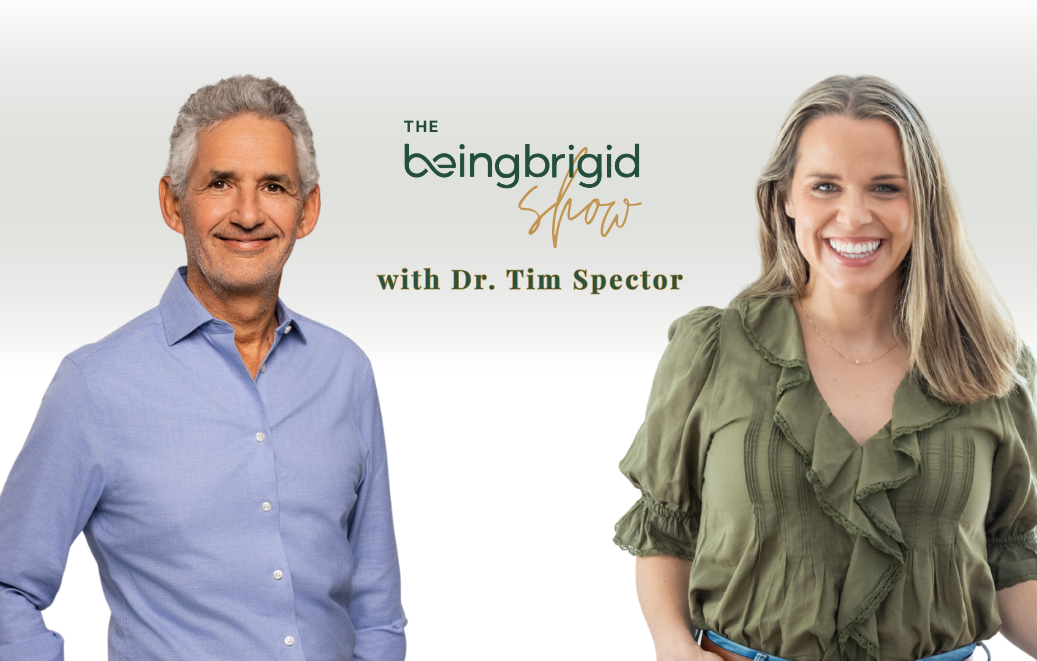
In this episode of The BeingBrigid Show, Brigid sits down with Professor Tim Spector, co-founder of ZOE, the nutrition science company leading the gut health revolution.
Together they explore how emerging research is reshaping the way we think about holistic nutrition, gut health, and the connection between food and chronic disease prevention. Instead of focusing only on weight loss or blood sugar numbers, this conversation highlights a more comprehensive approach to functional nutrition and root cause healing—one that considers the powerful role the gut microbiome plays in inflammation, hormone health, energy, metabolism, and long-term disease risk.
What You’ll Learn In This Episode:
- How the gut microbiome communicates with your brain, immune system, and metabolism
- Why energy, mood, and hunger are early signs your gut health is improving
- The surprising ways ultra-processed foods trigger inflammation
- Why focusing only on calories and macronutrients misses the bigger picture
- How eating 30+ different plants per week improves gut health
- The difference between prebiotics, probiotics, and fermented foods
- Why prebiotics may be more powerful than probiotic supplements
- How gut microbes influence blood sugar spikes and metabolic health
- The pros and cons of using a Continuous Glucose Monitor (CGM)
- Why diversity—not restriction—is key for long-term gut and hormone health
Timestamps:
- 00:00 Introduction to Professor Tim Spector and his research
- 02:12 How food signals to the brain, nervous, and immune systems
- 04:06 The gut microbiome as a community of mini-pharmacies
- 05:48 Holistic view of health: microbiome, immune, and nervous systems
- 07:58 Harmful effects of ultra-processed foods on gut microbes
- 11:52 Benefits of whole foods and dietary diversity
- 14:04 Symptoms improve before lab markers in dietary interventions
- 16:00 Short-term symptoms as signals of long-term health
- 18:10 Inflammation, fatigue, and early signs of chronic disease
- 22:01 Impact of diet on energy, cravings, and mood
- 26:00 Supporting gut health through plant diversity and prebiotics
- 31:00 Prebiotics vs probiotics: what works best for gut health
- 36:53 How gut microbes produce anti-inflammatory signals
- 44:59 Research on key microbes and diet changes
- 49:08 Future of gut microbiome testing and personalized health
- 54:04 Using stool tests and microbiome data to predict health risks
- 01:00:10 The role of continuous glucose monitors and gut health
- 01:03:50 Final thoughts and resources from Professor Tim Spector
The Gut Microbiome: Your Body’s Hidden Control Center
For decades, nutrition focused on calories, carbs, and vitamins. But emerging science shows the real driver of many health outcomes is the gut microbiome—the trillions of microbes living in your digestive system. These microbes act like mini chemical factories, transforming food into compounds that influence:
- Energy and metabolism
- Immune function
- Brain health and mood
- Inflammation
- Hormone health
This powerful gut-brain connection helps explain why nutrition affects more than weight—it also impacts fatigue, cravings, mood, and long-term disease risk.
Why Ultra-Processed Foods Harm Gut Health
One of the biggest threats to gut health today is ultra-processed food. These foods often contain additives, artificial sweeteners, emulsifiers, and very little fiber. This combination can damage beneficial gut bacteria and starve them of the fiber they need to survive. Over time, this imbalance contributes to chronic inflammation, blood sugar dysregulation, and increased risk of metabolic disease—which is why functional nutrition focuses on improving food quality and diet diversity.
Early Signs Your Gut Health Is Improving
Research shows people often notice improvements before lab markers change. Within just one week of improving their diet, many people report:
- More energy
- Better mood
- Less hunger and fewer cravings
Because of the gut-brain axis, the gut can influence how you feel quickly—making these early changes powerful signs that your metabolism and gut health are improving.
The #1 Habit for Better Gut Health
Professor Spector’s research shows the most important habit for gut health is dietary diversity—specifically eating 30 or more different plants per week. This includes vegetables, fruits, nuts, seeds, herbs, spices, whole grains, and legumes. Each plant provides unique fibers and polyphenols that support a diverse microbiome and reduce inflammation. Instead of restrictive diets, focus on adding more variety to your plate.
Prebiotics vs Probiotics
Many people rely on probiotic supplements, but research suggests prebiotics may be even more important.
- Probiotics are live bacteria from supplements or fermented foods.
- Prebiotics are fibers that feed beneficial gut microbes.
Studies show prebiotic-rich foods can improve gut microbiome health more effectively than probiotic supplements, highlighting the importance of whole foods and plant diversity.
What Gut Health Reveals About Blood Sugar
New research shows the gut microbiome plays a major role in blood sugar regulation. Scientists can now predict—with about 80–85% accuracy—whether someone will experience glucose spikes based on their gut microbes.
While continuous glucose monitors (CGMs) can help people learn about their blood sugar responses, long-term metabolic health depends on improving gut diversity and reducing inflammation.
Why Diet Diversity Beats Restriction
Strict elimination diets can sometimes reduce symptoms short-term, but long-term restriction can lower gut microbiome diversity. A healthier approach focuses on:
- Short-term elimination if needed
- Gradual food reintroduction
- Increasing plant diversity
This strategy supports root-cause healing, stronger immune health, and long-term metabolic resilience.
Resources & Links:
+ Watch the full episode on YouTube
+ Brigid’s Website
+ Brigid’s Instagram
+ Dr. Tim’s Instagram
+ ZOE’s Instagram
+ ZOE’s Website
+ Join the ZOEverse
If you want to improve your gut health, support hormone health, and experience the power of food as medicine, this episode is packed with insights you won’t want to miss.
Related
Eat This Way for Better Gut Health | #1 Gut Microbiome Doctor Tim Spector
MORE ENERGY, FEWER CRAVINGS, BETTER BLOOD SUGAR BALANCE—IN JUST 7 DAYS.
Sign up to get:
✓ A done-for-you 7 day meal plan full of dietitian-tested, blood-sugar–friendly recipes
✓ Coaching calls with me and my team of Registered Dietitians
✓ Support + accountability inside our private community
✓ Science-backed strategies that help you feel the shift
Sign up for The Blood Sugar Reset today!
This 7-day live, guided nutrition program is for you if you’re tired of afternoon crashes, sugar cravings, and feeling "off".
Resources
Join 30,000+ subscribers getting expert guidance to optimize their health and prevent chronic disease
sign up for our newsletter
Free, weekly insights from Brigid to help you feel like yourself again
Explore
 take the quiz